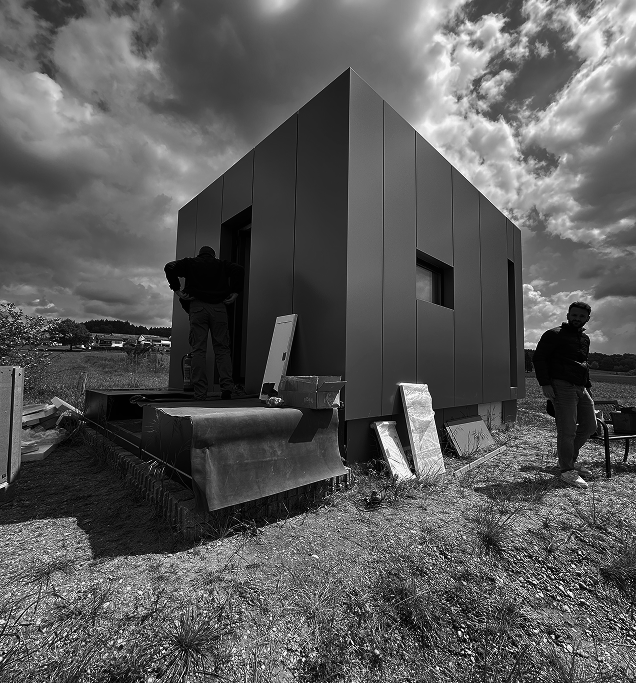
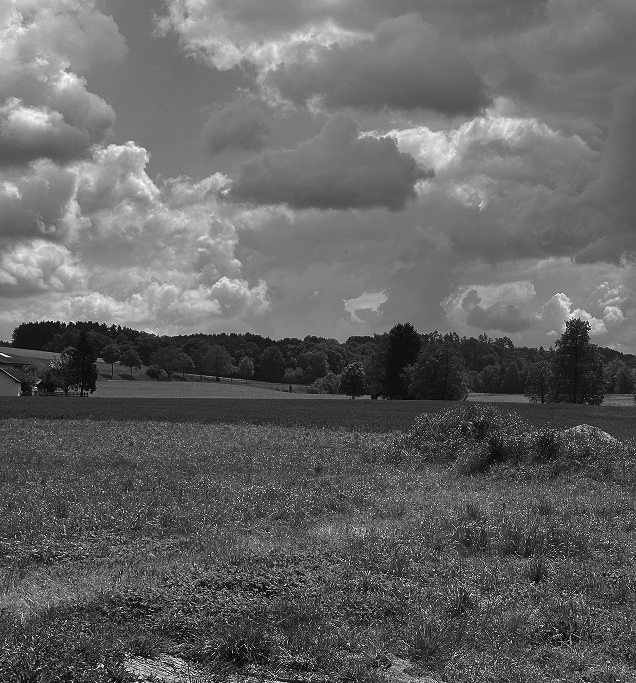
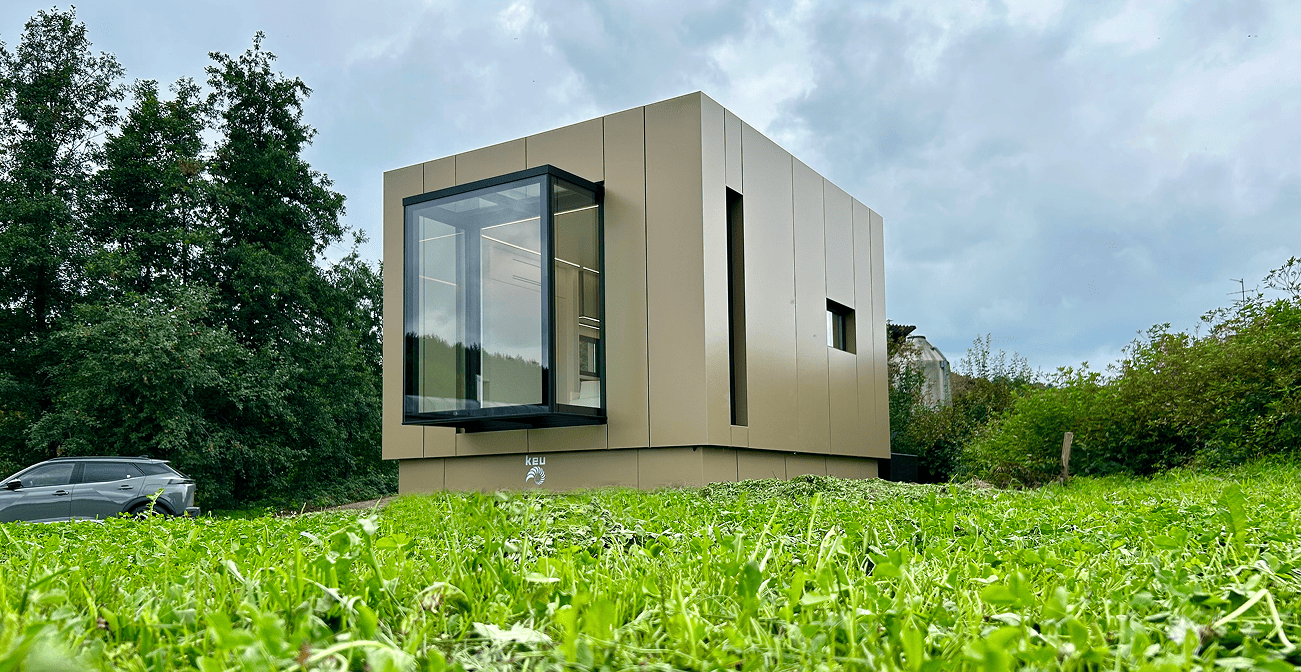
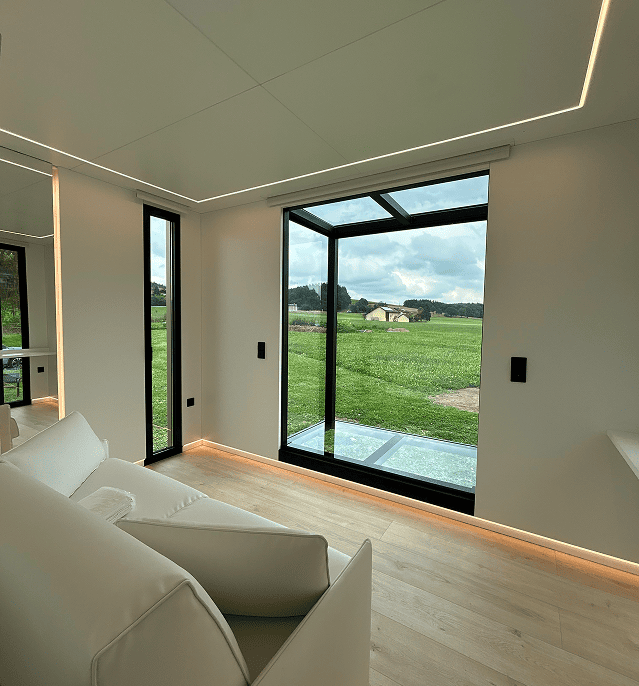
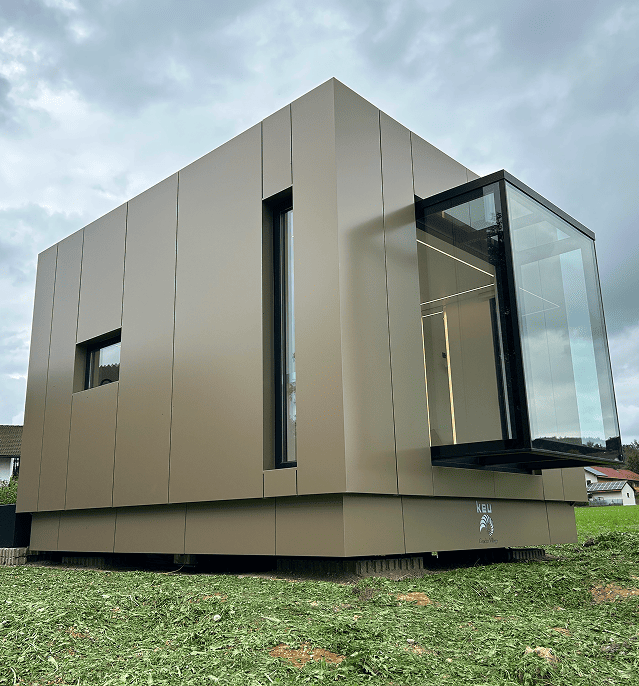
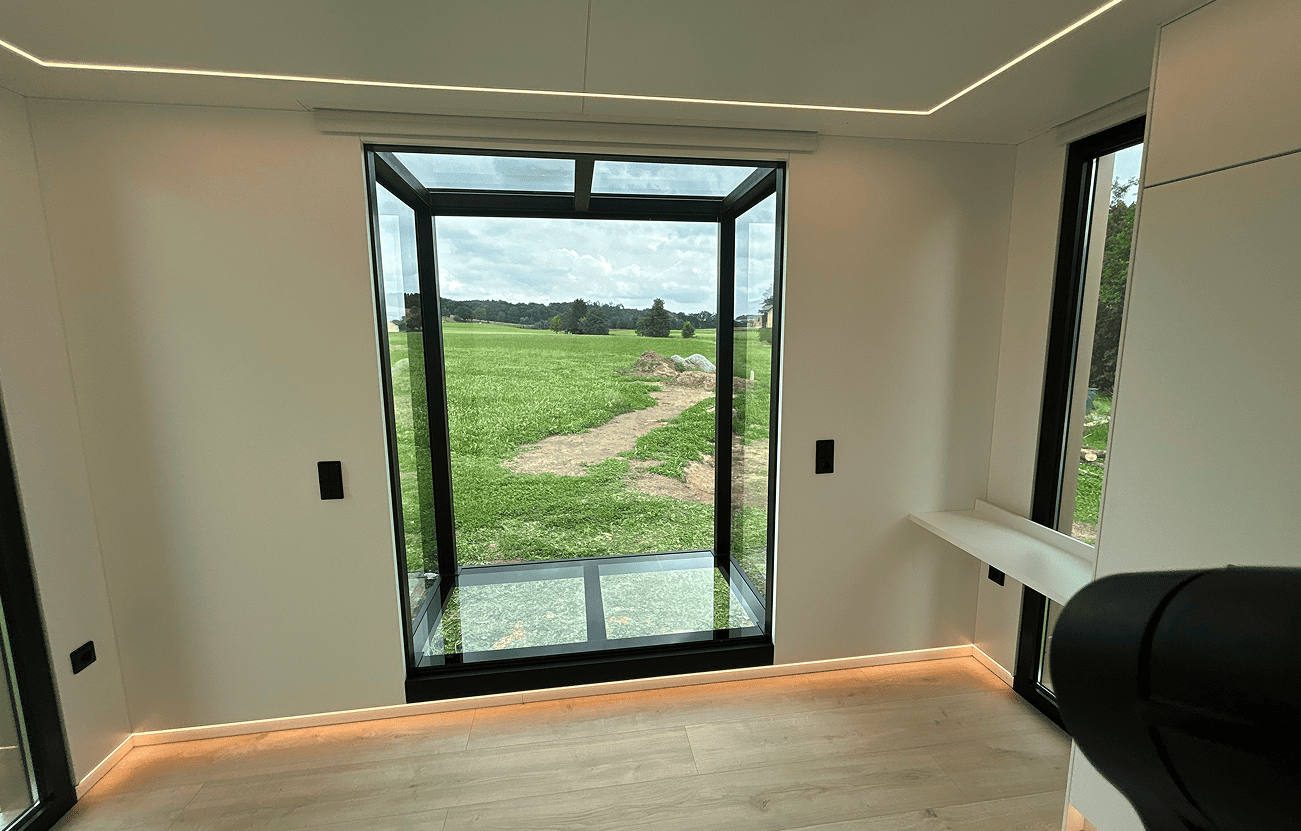
The project is born from the vision of Heribert, an economist committed to sustainability, and his relationship with Karl Holböck, the region’s mayor. The home is conceived as a KEU Pocket unit adapted to coexist with the agricultural environment: surrounded by cows, gardens, renewable energy systems, and circular production. The installation takes place alongside a working farm, respecting the dynamics of the site and making use of existing resources. The architecture rests on the land without altering its logic, creating a discreet platform that opens toward the productive landscape.
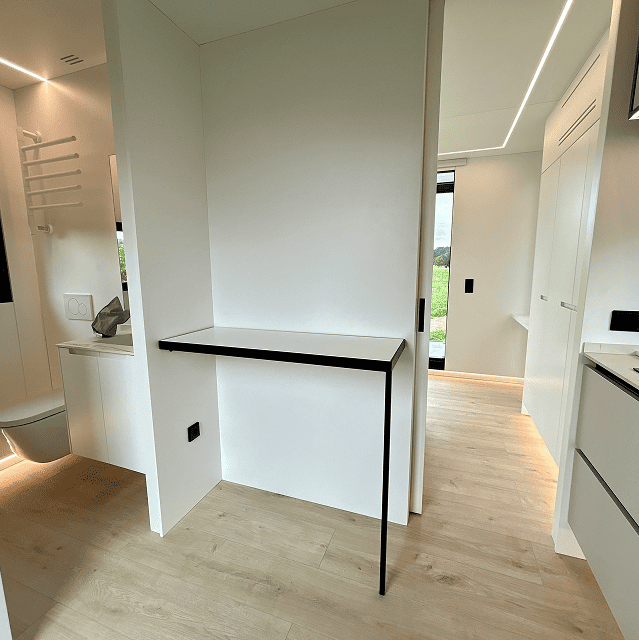
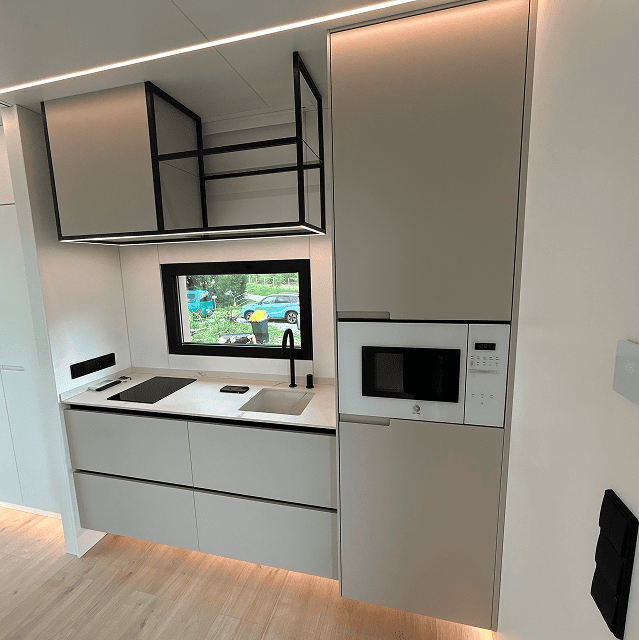
The spatial strategy is based on efficiency and integration: compact spaces, cross-ventilation, an optimized thermal envelope, and autonomous management systems. The home incorporates unique features not found in any other KEU unit: on-site recycling solutions, integration with composting systems, and mineral finishes that dialogue with the agricultural environment. The interior design prioritizes functionality without losing warmth, combining local materials with smart-home technology that simplifies everyday life.
KEU Stillhouse is not just a home; it is a statement of principles: proving that progress can coexist with the land, that design can be rural, and that self-sufficiency can be beautiful.